Fun Ways to Practice Personal Information Questions “All About Me” Activities for Autism and Preschool Social Skills

Updated: Jun 23

Time to Read: About 12 minutes
TL;DR
Many autistic and neurodiverse children need explicit teaching and repeated practice to answer personal information questions. Hands-on activities involving movement, pretend play, visuals, sensory experiences, and games are often much more effective than drill-style questioning alone. “All About Me” activities can help build conversation skills, self-awareness, expressive language, and social participation in ways that feel playful and is easier to generalize.

Table of Contents
Why “All About Me” Questions Can Be Difficult
Why These Skills Matter So Much
Doctor Pretend Play
Family Finger Puppets and “Who Lives at My House?”
“I Like It / I Don’t Like It” Games
Sensory Bin Conversation Activities
All About Me Board Games
Movement-Based Favorite Color Games
What If a Child Won’t Answer Questions?
Tips for Helping Autistic Children Answer Personal Questions
Related Resources
Why “All About Me” Questions Can Be Difficult
Questions like:
“What’s your name?” “How old are you?” “Who lives at your house?” “What do you like to eat?”
…can actually be surprisingly difficult for many autistic children and other neurodiverse learners.
Adults sometimes assume these are “easy” questions because the answers seem simple to us. But for many children, answering personal questions requires:
understanding WH-questions,
processing language quickly,
organizing thoughts,
tolerating social attention,
retrieving information,
and formulating a response at the same time.
For children with language delays, auditory processing differences, anxiety, AAC use, or social communication challenges, that can feel overwhelming very quickly.
Many children can answer these questions much more successfully when they are embedded into:
movement,
pretend play,
games,
sensory activities,
or highly visual routines.
Why These Skills Matter So Much
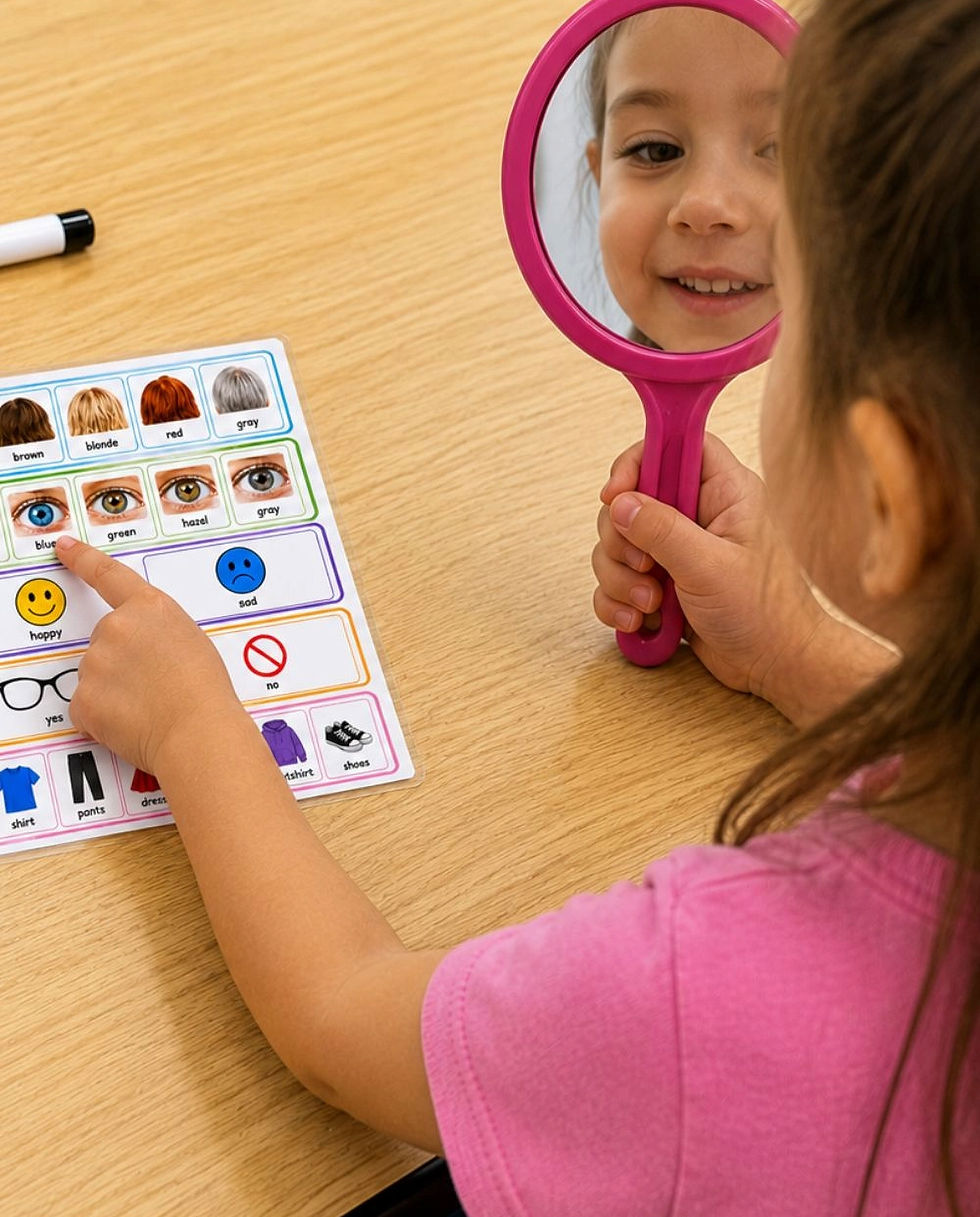
They help children practice:
conversation skills,
expressive language,
self-awareness,
social reciprocity,
emotional connection,
and peer interaction.
For many autistic children, the goal is not perfect answers.
The goal is:
participation,
connection,
communication,
and feeling successful interacting with other people.
Some of the best communication moments happen when children are relaxed and engaged in play instead of feeling like they are being “tested.”
Doctor Pretend Play

Doctor pretend play is a great way to practice personal information questions if you have children that enjoy dramatic play or peers that enjoy pretend play because it gives children a REAL reason to communicate.
Many children who rarely answer direct questions during circle time suddenly become very engaged when they get to pretend to:
check patients in,
answer phones,
give Band-Aids,
or use toy medical tools.

For this activity, you can set up a simple pretend doctor office using:
clipboards,
band aids,
toy doctor kits,
check-in forms,
symptom visuals,
weight scale
One child might pretend to be:
the doctor,
the receptionist,
the nurse,
or the patient.
The receptionist or doctor can naturally ask:
“What is your name?” “How old are you?” “What hurts today?” “What is your mom's name?”
Because the communication has a purpose, many children participate more naturally and with less pressure.
I also like this activity because it naturally incorporates:
waiting,
role rotation,
conversational turn taking,
and flexible thinking.
Children are not just answering isolated questions. They are participating in a shared social experience.

If your learners struggle with waiting during group activities, you may also like these posts:
These kinds of activities pair really naturally with pretend play because children are learning to communicate while also practicing flexibility, listening, and social interaction.

One thing that helps a LOT is allowing multiple ways to communicate. Some children answer verbally, while others:
point,
use visuals,
use AAC,
or imitate short sentence starters.
All of those responses count as communication.
Family Finger Puppets and “Who Lives at My House?”
Family-themed activities can be surprisingly powerful for building communication and emotional connection.

In this activity, children create simple finger puppets representing family members, pets, or important people in their lives. Then they use the puppets during pretend play and conversation activities.
This activity can feel less intimidating than direct questioning.
Instead of:
“Who is in your family?”
…the child gets to SHOW their family through play.
You can ask gentle questions like:
“Who lives at your house?” “Do you have brothers or sisters?” “Do you have any pets at home?”
The puppets become:
visual supports,
conversation prompts,
and emotional anchors.
I’ve also noticed that many children who struggle with abstract conversation do much better when they can physically hold or manipulate something while talking.
This activity can naturally expand into:
greeting practice,
storytelling,
emotions
One important thing I always try to remember during family activities: families can look very different.
Some children:
live with grandparents,
split time between homes,
have foster families,
or define family differently than adults expect.
Keeping the activity flexible and emotionally safe matters much more than the child getting “correct” answers.
“I Like It / I Don’t Like It” Games

Preference questions are often easier entry points into conversation than factual questions.
“I like i/ I don’t like” activities can be a great starting point for early social communication practice.
One easy version involves putting pretend foods inside a mystery bag. Children pull one out, identify it, and decide whether they like it or not. The adult can then ask, "Do you like..." and help the student respond.
The item then gets “fed” into:
a happy-face container,
or a “don’t like it” container.
Simple sentence starters with visual supports can help children participate more successfully:
“I like _____.” “I don’t like ______.”
If done in a group this activity is also a great way to work on perspective taking. Children begin noticing:
different people have different preferences,
peers may answer differently,
and conversations can involve comparing experiences.
That’s actually an early perspective and flexible-thinking skill for many autistic children.

Many autistic children naturally notice when peers answer differently than they do, which can lead to important conversations about handling disappointment, accepting differences, and tolerating unexpected responses.
If these are areas your child or students struggle with, you may also like this post or this post on teaching flexible thinking to autistic children step-by-step, spotting early signs of emotional dysregulation in autistic children, and coping skills activities for autistic preschoolers.
Sensory Bin Conversation Activities
Some children regulate and communicate MUCH more successfully when sensory input is included during learning activities. Sensory play can help some autistic children participate more comfortably in conversation activities.

In this activity, children search through:
rice,
pom poms,
beans,
lentils,
kinetic sand,
or other fillers
…to find picture cards hidden inside.
Once they find an item, they can sort into things they like and things they don't like and practice answering, "Do you like..." You can have children state, "I like..." or "I don't like..." each time they place the picture into the container.
Some children who avoid tabletop conversation activities will happily participate for long periods if sensory play is included.
The sensory input:
lowers pressure,
increases regulation,
and keeps the interaction feeling playful.
All About Me Board Games

Some children actually respond much better to structured activities with clear rules and predictable routines. If that sounds like your child or students, board games can be a really helpful way to practice personal information questions without the interaction feeling overwhelming or forced.
In this type of activity, children move around a game board while answering simple “All About Me” questions like:
“What is your favorite food?” “Who lives at your house?” “What do you like to play with?”
The structure of the game helps many children feel more comfortable because they know exactly:
when it is their turn,
what to expect,
and what happens next.
You can easily make your own board game using paper, markers, stickers, or index cards, or use printable versions designed specifically for autism social skills groups, speech therapy, or preschool classrooms.
If a child struggles to answer independently, you can:
offer choices,
allow pointing to visuals,
model answers first,
or let peers answer before their turn.
Reducing pressure usually increases participation much faster than repeatedly demanding responses.

Movement-Based Games
Some children communicate more successfully while MOVING.
A child who completely avoids answering questions during seated activities may suddenly become much more engaged if:
balloons,
tossing games,
movement,
or gross motor play
…are involved.
For some children, movement actually helps regulate their nervous system enough to make communication easier.
That’s one reason movement-based social communication activities can work so well for autistic preschoolers and other neurodiverse learners.
Favorite Color Balloon Game
One simple activity involves tossing colored balloons into the air while practicing favorite-color questions.
As children tap or pass balloons, you can pause occasionally and ask:
“What is your favorite color?” “Who likes blue?” “Can you pass me the red balloon?”

You can also encourage children to:
find peers who like the same color,
group balloons by color,
or ask one another simple questions.
Because the activity feels playful and active, many children participate much more naturally than they would during a seated conversation activity.
I’ve also noticed that some children who struggle with eye contact or social pressure seem much more comfortable answering questions while their bodies are moving.
If your child or students benefit from movement and sensory regulation during learning, you may also like these posts on coping skills activities for autistic preschoolers and spotting early signs of emotional dysregulation in autistic children.
Favorite Things Ball or Bean Bag Game

Another easy activity that works especially well for small groups, classrooms, or therapy sessions involves passing or tossing a soft ball or bean bag while practicing favorite questions.
Depending on the motor skills and regulation needs of the children involved, you can:
pass the object from person to person,
roll it,
or toss it between peers.
When a child receives the ball or bean bag, they answer a simple favorite question such as:
“What is your favorite food?” “What is your favorite animal?” “What is your favorite game?” “What do you like to play outside?”
Some children may answer verbally, while others:
point to visuals,
use AAC,
imitate peers,
or choose from picture options.
One thing I really like about this activity is that it naturally combines:
waiting,
listening,
turn taking,
peer interaction,
and conversation practice.
The physical act of passing or throwing the object also helps create a predictable structure for conversation:
“When I get the ball, it is my turn.”
That predictability can reduce anxiety for many autistic children.
You can also easily adjust the difficulty level by:
using highly preferred topics, i.e. favorite video game, etc.
offering visual answer choices,
repeating the same question multiple times,
or encouraging peers to ask follow-up questions for more advanced learners.
Activities like this pair especially well with explicit teaching around conversational turn taking and waiting skills. If those are areas your child or students struggle with, you may also like these posts on teaching waiting skills to autistic preschoolers and fun turn-taking activities for autistic children.
What If a Child Won’t Answer Questions?
This is extremely common.
And it does NOT necessarily mean:
the child doesn’t understand,
the child is ignoring you,
or the child cannot eventually learn the skill.
Some children:
need more processing time,
feel anxious,
script language,
communicate more successfully with AAC,
or shut down under social pressure.
One thing that often helps is reducing demands and increasing modeling.
Instead of repeatedly asking:
“What’s your name?”
Try:
answering the question yourself first,
letting peers answer first,
embedding questions into games,
using visuals,
or offering choices.
For many autistic children, communication improves dramatically once activities feel:
predictable,
playful,
emotionally safe,
and visually supported.
This would also be an excellent place to internally link to:
AAC posts,
expressive language posts,
imitation skills,
or communication development posts.
Tips for Helping Autistic Children Answer Personal Questions


Visual supports can make an enormous difference.
Many autistic children respond especially well to:
real photos,
sentence strips,
AAC supports,
picture choices,
and visual routines.
Keeping language repetitive also helps many children feel more successful.
Using familiar sentence starters like:
“I like…” “My name is…” “I am __ years old.”
…creates predictability and lowers processing demands.
And honestly, one of the most important things is accepting ALL communication attempts.
Children may:
point,
gesture,
use AAC,
imitate,
use approximations,
or answer partially before they can respond independently.
Those are still important communication steps.
Related Resources
If you want ready-to-use printable versions of many of the activities discussed in this post, including:

dramatic play,
sensory activities,
movement games,
visual supports,
conversation activities,
board games,
and self-awareness activities,
…you can find the full resource here:
Teachers Pay Teachers
Etsy
You may also like:

Comments